Eurovision Debate press briefing sets Brussels abuzz
06 mai 2014
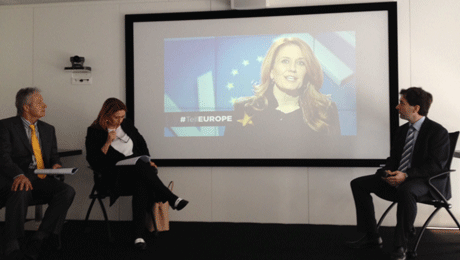
A lively media briefing in Brussels (5 May) enabled international press to quiz the organizers of the Eurovision Debate for the first time, with languages, rules and broadcast schedules topping the agenda.
Italian news anchor Monica Maggioni, who will moderate the debate when it goes live on television in around 50 countries on 15 May, told the gathered press that this was a historic opportunity for voters to have a say in who becomes President of the European Commission.
She explained some of the rules of engagement, such as the allowance of one minute for each candidate to formulate responses, and outlined the themes to be covered, including the economy, migration and Europe’s place in the world.
Ms Maggioni handed over to BBC Question Time director, Rob Hopkin, who said his vision for the Eurovision Debate was of a “scrupulously fair” face-off that will put the programme’s impartiality beyond doubt.
He said: "I am flattered to have been asked, and slightly daunted by the scale of this event; but imagine how the politicians will be feeling on the night. This is one of those events where the messages will have to be succinct. They will have to play by the rules, and we will play by the rules."
Mr Hopkin said he had drawn up a strict shot plan to ensure every candidate receives the same camera exposure, with no cutaways showing reactions from the audience or the other candidates.
Several reporters asked about the channels that broadcasters will use to air the debate, and how Eurovision will tackle language issues.
Eurovision Debate Project Leader Mike Mullane said the programme will be easily accessible online, and that viewers everywhere will have access.
"We're living in the post internet era," he said. "It's not a question of which channel it's being broadcast on; the channel is not important. What's important is the promotion of that channel so that the people who want to watch it know how to do so."
Regarding languages, he said the debate would take place in English, although candidates were at liberty to use another language if they preferred. So far, only the Party of the European Left nominee Alexis Tsipras has taken up this option, advising the EBU that he will debate in his native Greek.
Closing the briefing, EBU President Jean-Paul Philippot said the Eurovision Debate demonstrated the commitment of public service media to contributing to the democratic process.
"This debate will be a practical demonstration that gives our audiences a strong commitment: the guarantee of pluralism, of impartiality and transparency," he said, adding: "It is a unique opportunity for the audience to share in our strong PSM values, and an announcement of European public spirit in a broader media world.”
The Eurovision Debate will take place on 15 May from 9:00 pm CET, in the European Parliament Plenary Chamber. It will air live on television, online and radio in around 50 countries, from Canada in the west to Ukraine in the east.
Liens et documents pertinents
Related news

Communiqués
Couverture diffusée par 212 chaînes du débat Eurovision 2024
Le 20 juin, l'UER a dévoilé les chiffres d'utilisation du débat Eurovision. 212 chaînes dans 51 pays ont diffusé le débat, qui s'est tenu le 23 mai et...

Déclarations
Les Membres de l'UER apportent un net soutien aux réformes visant à renforcer la confiance et à protéger la neutralité du Concours Eurovision de la Chanson, autorisant tous les Membres à y participer
Réunis aujourd'hui à Genève pour leur Assemblée générale, les Membres de l'Union Européenne de Radio-Télévision (UER) ont apporté leur soutien à une série...
Blogs
Ce que la crise de la BBC peut apprendre aux médias de service public
Dix jours de controverses et de démissions ont été traumatisants à la BBC, qui auront des répercussions dans toute l'Europe. La démission du directeur...

Communiqués
L’UER annonce plusieurs modifications des règles de vote du Concours Eurovision de la Chanson pour renforcer la confiance et la transparence
L’Union Européenne de Radio-Télévision (UER) annonce une série de modifications importantes des modalités de vote au Concours Eurovision de la Chanson,...
Blogs
Bientôt disponible : la deuxième édition de VOICES - le Festival européen du journalisme et de l'éducation aux médias
VOICES rassemble des citoyens, des journalistes et des professionnels des médias pour célébrer le journalisme et l'éducation aux médias et le rôle qu'ils...
Communiqués
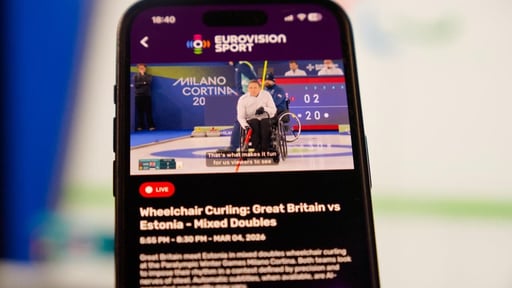
Eurovision Sport et CAMB.AI fourniront des sous-titres en direct et à la demande pour les Jeux paralympiques d'hiver de Milan-Cortina 2026
Eurovision Sport, la plateforme de diffusion gratuite de l'Union européenne de radio-télévision (EBU), avec son partenaire CAMB.AI, diffusera des sous-titres...
Communiqués
L'UER déclare que « les journalistes comptent » pour le Conseil de l'Europe
Le 18 juin, l'Union européenne de radiodiffusion a annoncé son soutien au programme « Les journalistes comptent » du Conseil de l'Europe. campagne pour...
Histoires
NVIDIA Media Chief : « Nous sommes prêts à travailler avec vous pour bénéficier des avantages de l’IA. »
Le responsable des médias et du divertissement de NVIDIA, l'entreprise la plus précieuse au monde, a déclaré lors de l'Assemblée générale d'été de l'UER...