EuroDIG conference tackles questions of connected TV
26 juin 2013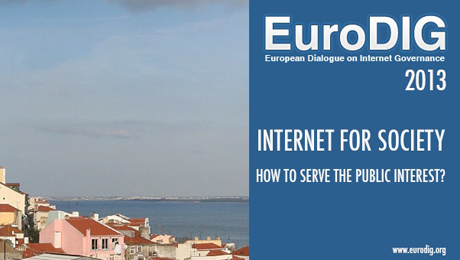
The sixth European Dialogue on Internet Governance (EuroDIG) took place in Lisbon on 20 and 21 June, drawing 500 European professionals to discuss net neutrality, copyright issues related to online content and connected (or smart) TV.
Organized by the Portuguese government, the Portuguese Internet Society and Portuguese EBU Member RTP, the meeting was supported by the EBU and other bodies such as the Council of Europe and the Internet Governance Forum (IGF) secretariat.
The EBU, the Council of Europe, the European Commission (EC) and the Portuguese government promoted a seminar on connected TV, which was moderated by Elizabeth Markot from the EC's DG Connect Unit and RTP news presenter Pedro Bicudo.
It was a debate that sprang from the Commission Green Paper on converged media ("Preparing for a Fully Converged Audiovisual World") and led to several high-level conclusions that were presented back to the Plenary.
Among the key conclusions reached were:
- Connected TV puts the citizen at the centre; however, for citizens to draw full benefit special attention needs to be given to media literacy and to the role of intermediaries and/or gatekeepers;
- The importance of fundamental rights and values underpinning audiovisual policies, such as child protection, protection of vulnerable groups (such as the elderly and low income families), accessibility, data protection, media pluralism and cultural diversity;
- Huge opportunities arising from connected devices, provided that certain conditions are met, such as stakeholder cooperation. A striking example of this is accessibility services for the visual or hearing impaired, a growing group in Europe due to the aging population.
Following the debate EBU Head of Media and Communications Law, Michael Wagner, said: "What struck me most was the shared belief that connected devices and hybrid services should be used to empower consumers. They should be able to combine the best of both worlds, broadcasting and internet, without their privacy or consumer rights being undermined, and without their choice of content being influenced by powerful intermediaries."
Liens et documents pertinents
Related news

Positions
L'UER appelle les législateurs de l'UE à préserver la radio dans les voitures et la neutralité du net dans la loi sur les réseaux numériques
Le 18 mai, l'UER a publié sa position politique concernant la loi sur les réseaux numériques (DNA). L'ADN façonnera la manière dont les citoyens européens...

Communiqués
Prochaine évaluation de la Directive SMA : le Conseil aborde les questions clés pour les médias de service public
Le 13 mai, les ministres de la Culture de l'UE ont arrêté leur position concernant la prochaine évaluation de la Directive Services de médias audiovisuels...

Positions
L'UER demande à l'UE de protéger l'accès aux médias de service public dans le Digital Networks Act
Les membres de l'UER ont pour mission d'atteindre tous les citoyens avec un contenu de haute qualité pour les informer, les éduquer et les divertir. Pour...

EBU TC Statement calling for Trusted Cloud and AI Infrastructure in Europe published
The European Broadcasting Union (EBU) Technical Committee has now officially published its position statement calling for sovereign, interoperable, resilient...
Opinions
Pas de vérité ? Pas de liberté. La démocratie dépend de l'accès à une information fiable.
Les citoyens ne peuvent prendre de décisions éclairées ni participer à la vie démocratique sans accès à des sources d'information fiables, indépendantes...

Positions
Les radiodiffuseurs européens demandent à la Commission européenne d'appliquer des règles de contrôle aux téléviseurs connectés et aux assistants virtuels
Le 23 mars, une coalition de représentants du secteur des médias audiovisuels et de la radio a appelé la Commission européenne à désigner les systèmes...

Histoires
Protection des mineurs en ligne : le Parlement européen cite la contribution positive des médias de service public
Le Parlement européen a adopté aujourd'hui son rapport d'initiative sur la protection des mineurs en ligne, qui répond à la nécessité urgente de protéger...

EBU Technical Assembly calls for trusted Cloud and AI infrastructure in Europe
The European Broadcasting Union's (EBU) Technical Assembly has agreed on a position calling for the development of sovereign, interoperable, resilient,...