Q&A: BBC's Graham Ellis on the future of public radio
16 septembre 2013

Graham Ellis, Deputy Director of BBC Radio
and EBU Radio Committee Chairman (BBC)
Graham Ellis, Deputy Director of BBC Radio, was elected chairman of the EBU Radio Committee in May, 2013. Three months into the job, ahead of the 56th Euroradio Committee Meeting, he reflects on the role of radio public service broadcasters and his priorities for the next two years.
After an apprenticeship in newspaper journalism, you joined BBC Local Radio in 1976. What prompted you to change medium?
I loved newspapers, and particularly writing for print, but it was a time when radio and television were expanding rapidly. It was an exciting world and I wanted to be part of it. It still is and more than 35 years on I still enjoy it.
By the early '80s you were producing a wide range of investigative documentaries and series. Today, the debate over media ethics has never been livelier and the boundaries between matters of public interest and privacy have never been more blurred. Can self-regulation be trusted?
One might equally ask whether formal regulation can be trusted. No system of regulation is perfect. Ultimately I suspect most of us prize media freedom above privacy - but that freedom comes at a price and the price is self-restraint. Better that than state restraint.
Despite the radio industry throwing its weight behind DAB, a switch-off of the analogue radio signal still appears some way off. What must be done to hasten the change-over?
In those countries with developed digital radio infrastructure broadcasters are understandably impatient to move ahead and end the dual running costs associated with operating both analogue and digital systems. But there’s still a long way to go. In the UK most listening remains analogue and most new cars still leave the showroom without a digital radio. So change will take time and consumers will set the pace. It makes no sense to switch off analogue services before audiences are ready. In the meantime broadcasters can help consumers on the journey to digital by pointing out the advantages in both sound quality and choice of stations. Here a taste of how we do that in the UK:
In 2013, you were appointed Deputy Director of BBC Radio, and you are also responsible for the production of popular and classical music programmes for BBC Television. What brings an audience to its feet?
Audiences in concert halls, at festivals and at home love great music performances and a shared experience. I’m pleased to say that the EBU plays a huge part in making that a reality for millions. Not many people can afford the best seat in the house at the Metropolitan Opera House in New York or at the New Year’s Day concert in Vienna, or at the Last Night of the BBC Proms in London. But thanks to the EBU’s music exchange programme you can enjoy it all in the comfort of your own home, and much more as well. We should be proud of the way we have collaborated over many years to bring our audiences such wonderful music.
Recently, Euroradio launched the new video exchange platform Euroradio2See, which enables Radio Members to exchange and embed concert videos, clips and interviews, live or on demand. Will video save the radio star?
No, only radio will save the radio star. Radio is a resilient medium which has seen off the challenge from a number of potential competitors. That’s because radio has inherent strengths. It’s highly portable, so you can get it pretty well anywhere. It’s mostly live - people enjoy a live shared experience. And it’s a secondary medium, in other words you can do something else while listening. Of course it’s important that when people listen using devices with a screen that we have something to put on the screen, and it’s important to put our brands in new places (see below). But great programmes matter more.
One of the big challenges facing public service broadcasters is how to attract youth audiences. Can we win them back?
This is a challenge for all radio broadcasters not just the public service broadcasters. Although we still have very big youth audiences they are shrinking, particularly in terms of the hours they spend listening to radio. I don’t think it’s a matter of winning them back to traditional radio consumption, so much as looking at how and where young people spend their time and making sure our radio brands are present in those places. Then we need to capture the right data. For the young, "time spent with brand" may be a better measure of success than radio listening hours. Here’s an example. This BBC Radio 1 video didn’t gain us one extra minute of recorded listening but has run up almost 12 million views on YouTube.
Since your election to the Euroradio Committee in Vilnius, Lithuania in 2008, you’ve played an active role in the EBU Radio Community. As its new chairman, what are the top three priorities?
I’ve only just got my feet under the table and we are still looking at what should be our priorities for the committee’s two-year term. Clearly the committee will want to make sure that our radio members get the best possible value from the EBU. We shall also want to create an environment in which we support each other and share experience. Getting the annual Radio Assembly right and making it a "must go to" event is important too. There’s a lot to do…
One of radio’s unique advantages is its portability. Where are you when you listen to the radio and what do you regularly tune in to?
I’m pretty promiscuous when it comes to stations. Before work it’s either News from BBC Radio 4 or music with BBC Radio 2. Classical music from BBC Radio 3 is on in the office as I write. In the evening it will be documentaries or a concert. On a drive I flick around the dial until I find something interesting. I also like to check out the commercial competition and see what they’re up to.
Liens et documents pertinents
Related news

Discours
Certaines de nos lignes rouges sont devenues des tracasseries administratives contraignantes. Il est temps de repenser.
Ce texte est basé sur un discours prononcé par la directrice de l'information de l'UER, Liz Corbin, lors du Forum sur l'IA, le 25 mars 2026, à Bruxelles....
Blogs
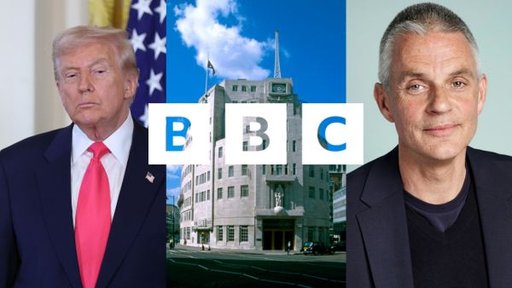
Ce que la crise de la BBC peut apprendre aux médias de service public
Dix jours de controverses et de démissions ont été traumatisants à la BBC, qui auront des répercussions dans toute l'Europe. La démission du directeur...

Blogs
EBU x Eurosonic : une longue histoire de collaboration
Comment tout a commencé : À l'EBU, nous passons beaucoup de temps à parler de la musique qui traverse les frontières et Eurosonic Noorderslag est l'un...
Blogs
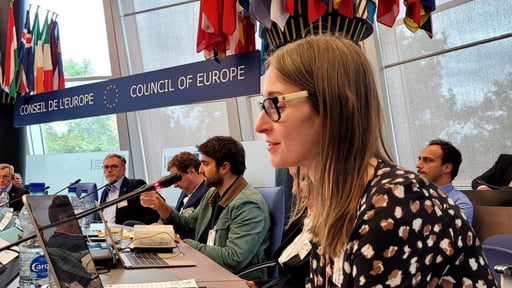
L'UER appelle les États membres du Conseil de l'Europe à protéger les médias de service public
Je voudrais commencer par le positif. Le Conseil de l'Europe comprend le rôle des médias de service public dans la défense du droit fondamental à la liberté...

Histoires
"La transparence est importante, mais le public ne veut pas de labels IA partout, seulement lorsque cela est matériellement important"
L'IA générative va-t-elle changer la donne pour le journalisme ? Je suis un peu plus sceptique qu'il y a six mois. Il s'agit d'une énorme transformation...

Positions
L'UER déclare au gouvernement britannique : « Les modifications apportées à la Charte de la BBC pourraient façonner l'avenir des médias de service public à l'ère numérique »
Le 10 mars, l'UER a soumis sa réponse à la consultation du gouvernement britannique sur le renouvellement de la Charte royale de la BBC, prévenant que...
Déclarations
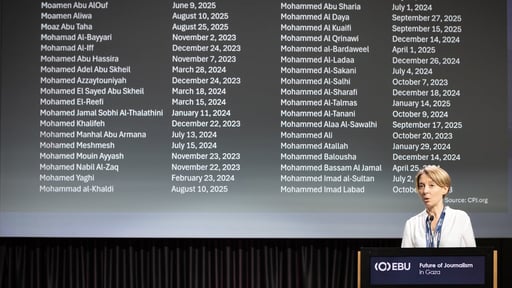
L'avenir du journalisme à Gaza est l'avenir du journalisme
La semaine dernière, à la veille de la Journée mondiale de la liberté de la presse, l'Union européenne de radio-télévision a réuni des journalistes, des...
Discours
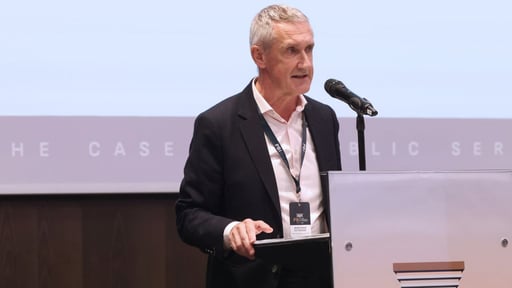
Jean Philip De Tender : la société aura toujours besoin des médias de service public si nous restons fidèles à nos valeurs
Jean Philip De Tender, directeur général adjoint et directeur des médias de l'UER, a prononcé ce discours lors du salon Public Broadcasters International,...