The Bruges Group Reacts to Satellite Interference
18 June 2010Brussels, 18 June 2010- The Bruges Group*, an organisation representing European public television stations which broadcast internationally, is concerned at the systematic interference with the satellite broadcast of some of its members, and is asking that the governments in question react energetically.
This interference currently relates to broadcasts in the Farsi language by the BBC and Deutsche Welle (and the Voice of America, which is not a member of the Bruges Group). The technical analyses carried out by satellite operators have enabled the definite identification of Iran as the territory from which these interfering signals are originating. This is, therefore, a deliberate operation of organised interference, aimed at specific broadcasts, which is equivalent to international piracy.
The Bruges Group has found that there is no remedy in international law, or at the level of the International Telecommunications Union (ITU) or at the level of the UN to prevent these interference operations in an effective manner or to sanction them. The Bruges Group therefore supports the action being considered by the CEPT to remedy this situation and requests all member countries of the ITU to associate with this. This action consists, in particular, of proposing that the ITU Plenipotentiary meeting in October 2010 pass a resolution to protect telecommunication satellite assets and operations, and also requesting the involvement of the Legal Subcommittee of UNCOPOUS (United Nations Committee on the Peaceful Uses of Outer Space).
The Bruges Group is also concerned with the easy solution which would be for satellite operators to cease broadcasting the affected signals, on the pretext that this interference would result in collateral damage to other broadcasts or to the satellite itself. The Bruges Group, on the contrary, is asking the satellite operators to demonstrate their solidarity with the affected channels and to associate themselves with the action to end this interference, if necessary by going as far as to cease broadcasting signals from the country clearly identified as being at the origin of the interference. The Bruges Group hopes that a code of conduct of this type will be approved at the next meeting of the European Satellite Operators Association (ESAO) in June 2010.
The Bruges Group affirms that satellite broadcasting constitutes the primary network for their international distribution and that it is therefore essential to the existence of the freedom of speech and the free circulation of information.
About the Bruges Group
*The Bruges Group has 19 members representing the main international public service broadcasters in Europe. Regular meetings are organized in order to share experience and cooperate on technical, legal, programming and distribution matters in Europe and throughout the world.
Its members are: ARTE, BBC World News, TV Bulgaria, BVN, Deutsche Welle, Duna TV, ERT, EuroNews, France 24, France Télévisions, HRT International, New Co RAI International, RTPi, RTR International, RTVE Internacional, TV5Monde, TVP, TVR international. Since May 2003, all efforts of the group get substantial support from the European Broadcasting Union's Brussels office.
Relevant links and documents
Related news

Statement
EBU and international media organizations raise concerns over proposed changes to Lithuania’s public service media framework
The European Broadcasting Union (EBU) and the undersigned international media organizations have written to Lithuanian authorities to express their concern...
Statement
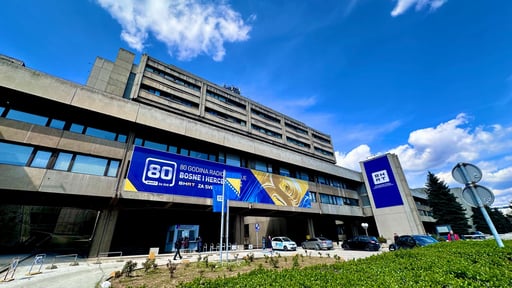
EBU, International Organisations and CEE Public Broadcasters Urge European Commission to Act as Bosnia and Herzegovina’s Public Service Media Faces Collapse
The European Broadcasting Union (EBU), leading international media freedom organisations, and public service media from across Central and Eastern Europe...
Statement
EBU Executive Board expresses its serious concern over proposed changes to Lithuania’s public service media framework
Members of the Executive Board of the European Broadcasting Union (EBU) have expressed their dismay to learn that the proposed amendments to the Law...

Policy Position
European broadcasters' common position paper on the Draft WIPO Broadcasting Organizations Treaty
On 25 March 2025, the EBU called upon WIPO Member States to recommend the WIPO General Assembly to convene a Diplomatic Conference for the adoption of...
Op-ed
No facts? No freedom. Democracy depends on access to reliable information
Citizens cannot make informed decisions or participate in democratic life without access to reliable, independent, and locally relevant sources of information....
Stories
EBU Central and Eastern European broadcasters call on Lithuanian parliament to safeguard LRT independence
Public service media organizations from across Central and Eastern Europe have today sent a joint open letter to the Lithuanian Seimas, expressing serious...

Statement
EBU concerned by establishment of committee of inquiry into RTVE
The EBU expresses its concern ahead of the establishment of a committee of inquiry into the RTVE Corporation, approved by the Spanish Senate and due to...

Press release
5G Broadcast receiver profile for Europe released for review
The European 5G Broadcast handset taskforce, gathering EBU and BNE members, has published a 5G Broadcast receiver profile for use by companies within the...