EBU engages in strategic EU discussions on future use of radio spectrum
14 January 2014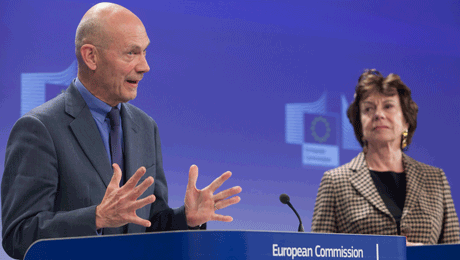
The EBU is taking part in a High Level Group set up by Digital Commissioner Neelie Kroes to discuss the future of radio spectrum. EBU Director of Technology Simon Fell was in Brussels yesterday to highlight the importance of radio spectrum for digital terrestrial broadcasting.
He said: “Public service media are focused on making great content and getting it to audiences in a way that is near universal, affordable, efficient and of guaranteed quality of service. Digital terrestrial broadcasting is the only platform which fully meets these audience needs. It is, and will remain for the foreseeable future, indispensable to Europe’s thriving content and TV platform industries. 250 million viewers rely on the terrestrial platform for their primary television services. Further most households use terrestrial receivers for secondary television reception.”
He added: “Broadcasters are developing exciting new services for the multi-platform environment and ever more popular content offerings delivered through connected TV sets and other devices. Combined with fixed and Wi-Fi broadband in the home offers, broadcasters can offer a wealth of programming and additional content enhancing free-to-air broadcasts with additional catch-up services.”
Chaired by former WTO President Pascal Lamy, the High Level Group involves top executives from Europe's broadcasters, network operators, mobile companies and related industry associations. It has been tasked with delivering a report by July 2014 to feed into the European Commission’s long-term strategic and regulatory policy on the future use of the whole UHF band.
The Group will look at how Europeans receive audiovisual content, including linear TV, in the long term future and how this will affect spectrum use in the UHF band. The group’s response should aim to secure public and consumer interest while facilitating market transformation.
The EBU has welcomed Commissioner Kroes’ commitment to open a dialogue with the different stakeholders with the aim of developing a long-term vision for efficient media delivery which respects consumer interests and supports universal access, consumer choice and platform competition. Decisions about the future of media delivery should ensure universal and easy access to public service media content on all relevant platforms and means of delivery.
Relevant links and documents
Related news

Press release
DNA: European Commission rightly safeguards media in its push to modernise telecom markets, but radio needs more
The EBU welcomes the Digital Networks Act (DNA) proposal, published today by the European Commission. The DNA aims to modernise telecommunications markets and...

Policy Position
EBU calls for safeguards to access public service media content in the Digital Networks Act
EBU Members are entrusted with the mission to reach all citizens with high quality content to inform, educate and entertain. To achieve this, they rely...

Policy Position
EBU calls on EU lawmakers preserve radio in cars and net neutrality in the Digital Networks Act
On 18 May, the EBU published its policy position on the Digital Networks Act (DNA). The DNA will shape how people across Europe access digital services...

All content, for everyone, everywhere: a core challenge for PSM, past, present and future
With Italy’s Rai hosting the EBU Technology & Innovation Summit and Technical Assembly 2024 in Naples, Chief Technology Officer, Stefano Ciccotti provides...

Policy Position
European broadcasters urge the European Commission to apply gatekeeper rules to connected TVs and virtual assistants
On 23 March, a coalition of audiovisual media and radio sector representatives called on the European Commission to designate connected TV operating systems...

Preparing for the next generation of free television services in Ireland
DVB-I, the open standard for internet-centric television service discovery, could be key to the future development of the digital terrestrial television...

Switching off MW and switching on to a digital future for Spanish radio
Manuel Delgado, Head of Broadcast Resources at Spain’s RTVE, explains why the roll-out of DAB+ is essential to secure radio’s digital future while keeping...
Policy Position
EU’s Multiannual Financial Framework must support innovation in media
The EBU has called for robust EU support for media innovation in the European Commission's public consultation on the Multiannual Financial Framework (MFF)....