NRK: great original content and production flexibility are key
22 May 2014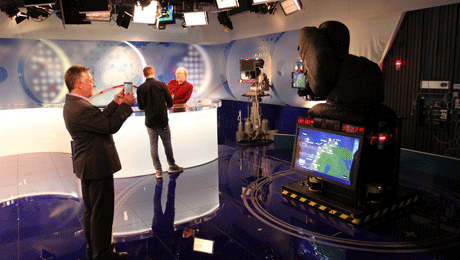
Can a public broadcaster that enjoys soaring audience trust and delivers value for money afford to sit back and relax?
The CEO of Norwegian broadcaster NRK, Thor Gjermund Eriksen, said during the recent EBU IMPS visit to Oslo that mounting pressure on public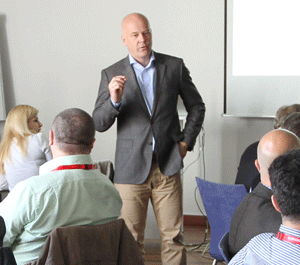 broadcasters from online media meant the answer was unquestionably 'no'.
As a public service broadcaster, NRK is a triumph: 95 percent of the Norwegian audience feels NRK offers trustworthy news and documentary programmes, while 82 percent trust the organisation. On top of that, 74 percent feel they are getting value for money from the license fee.
Yet Thor Gjermund Eriksen (pictured right) said there is much to be done if his organization and others like it are to weather future challenges posed by online operators. It is a fact that younger people prefer to get their news online rather than via linear media, while global players like Netflix are making considerable inroads into the market for big budget drama and movies.
According to Eriksen NRK's response must be twofold: first, it has to allocate more money to creating original, high quality content in order to provide an appealing Norwegian language alternative to foreign imports. Secondly, NRK must increase its organisational flexibility, to adapt to the latest requirements from the market, such as a growing appetite for immediately available, continuously renewed mobile content.
Technical consequences
Technically speaking, this means ensuring that all production facilities are up to the task, both in terms of technical quality and speed. As NRK technical experts explained during the visit, this has consequences for the choice of video codecs, for example, because it translates into requirements such as minimizing transcoding delay and avoiding vendor lock-in.
Concerning the need for a more flexible production apparatus, the answers discussed in Oslo in this context revolved around more flexible system integration and the pervasive use of metadata. Most of this is not new for NRK, which started integrating its radio and television units back in 2002.
One could argue that NRK was ahead of its time, having had the vision, but not the urgency, to drive such changes through. The current revolution in media technology and consumption has changed that situation and given NRK reason to reinvent itself, even though it is already performing very well.
Relevant links and documents
Related news

Statement
EBU welcomes decisive Swiss vote in support of SRG SSR
The European Broadcasting Union (EBU) welcomes the outcome of the Swiss public vote in support of SRG SSR, reaffirming the vital role of public service...

Blog
The 4 burning policy questions for AI and the media sector
AI is moving fast, and it’s no secret that it’s impacting Europe’s media landscape. Public service media embrace the opportunities AI brings to drive responsible...

Stories
"Transparency is important, but the public does not want AI labels everywhere, only when it is materially important"
Is generative AI a game-changer for journalism? I’m a bit more sceptical than six months ago. It’s a huge transformation in terms of the potential for...

Press release
EBU calls for rethink of online news limits for German public media in draft reforms
[Siehe unten für die deutsche Version dieser Pressemitteilung zum Reformstaatsvertrag] The European Broadcasting Union (EBU) welcomes efforts to ensure...

Speech
Some of our red lines have become constrictive red tape. Time for a rethink.
This text is based on a speech delivered by EBU Director of News, Liz Corbin, at the AI Forum, on 25 March 2026, in Brussels. I’ve been thinking a lot...

Statement
Adequate funding vital to SRG SSR’s public service mission
On 8 March, Swiss citizens will vote on a popular initiative that includes a massive reduction in household licence fees and the elimination of business...

Less budget, more content: public media goes smart
How can public broadcasters deliver more diverse content across expanding platforms while working with the same resources?Smarter production is the key,...
Policy Position
EMFA in focus: EBU urges strong safeguards for public service media in Poland
On 23 January, the EBU submitted its response to Poland’s public consultation on the implementation of the European Media Freedom Act (EMFA). In our submission,...