Karen Hao: the AI story is about power
02 March 2026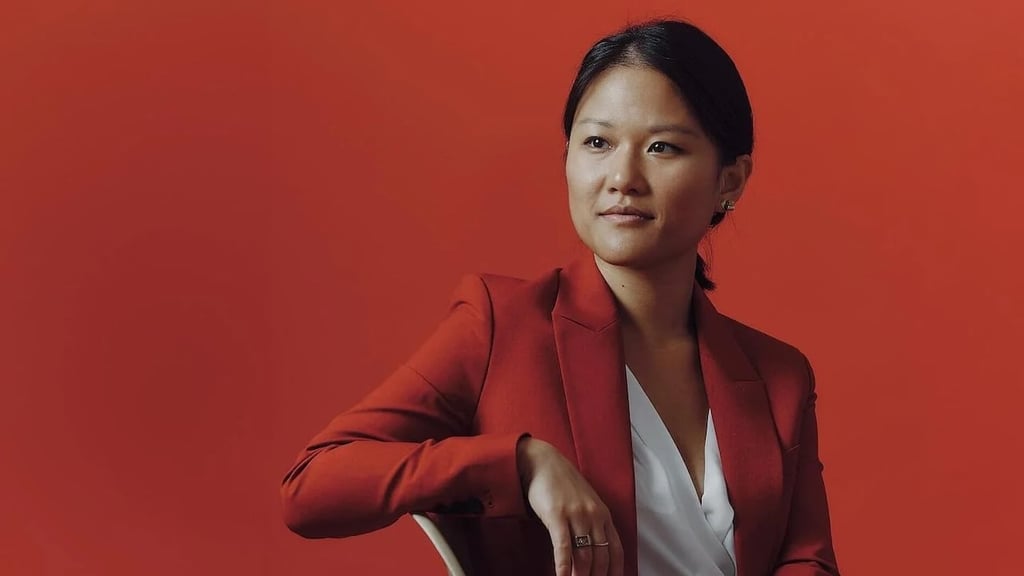
Few reporters have scrutinized the rise of artificial intelligence as closely as Karen Hao, who will give a key address to the EBU AI Forum, on 25 March. Register now to attend, as places are limited.
Few reporters have scrutinized the rise of artificial intelligence as closely as Karen Hao, who will give a key address to the EBU AI Forum, on 25 March. Register now to attend, as places are limited.
The former tech correspondent and now leading voice on AI accountability, she co-created the Pulitzer Center’s AI Spotlight series, training thousands of journalists worldwide to interrogate one of the most powerful industries of our time. She argues that AI is not a niche technology beat, but a story about power, democracy and public trust, and that every newsroom must investigate them with rigour and independence.
You co-created the Pulitzer Center AI Spotlight series, a programme that has trained thousands of journalists around the world on AI. What are the key learnings for them to ask the right questions, to follow the right sources of information?
One is that every single journalist can be an AI journalist. I feel very, very strongly about this, that there is no reason someone who has covered finance or healthcare or environment cannot start covering AI, especially because AI intersects all these different topics. And so, we cannot just have people with technical expertise covering the technology because we would fundamentally miss the bigger story that is happening of how it is impacting every single sector.
The second thing that we really focus on is understanding that, ultimately, the story of AI is about power. And it’s just like any other beat where journalists are meant to hold power to account. For example, when we cover the CEOs at AI companies, we should not be covering them in the same way as we do scientists, simply quoting and platforming whatever they say. We should always be fact-checking everything that the CEO says.
How do you think trust has changed because of the use of AI by media organizations?
It really varies depending on how a media organization goes about using AI. There are some not so great examples of rapid AI adoption where organizations have really damaged their brand.
There are other newsrooms like the non-profit The Markup who have an AI ethics policy where they explicitly articulate exactly how and when they use AI and when they would not.
Media companies also span the spectrum right now of either going for a full-on partnership with OpenAI or adopting more bespoke AI tools. And, because the AI industry has become deeply unpopular among a broad cross-section of society, I think these more full-on partnerships raise a lot of questions for audiences.
What would be your advice to media companies approaching their AI strategies?
In journalism, first and foremost, our goal is to be defenders of democracy. This should be your North Star for any AI strategy that you design. The first question to ask should be: is performing this action fortifying democracy or helping powerful companies undermine democracy?
To me, an AI strategy is incomplete without investments into AI accountability reporting. I also think we need as much as possible to shift to open-source models as well as to limit the surface area of your organization that is giving data to these AI companies.
There needs to be more investment in bespoke AI tools that are by and for journalists. What is mostly on offer is one very particular type of AI technology – large language models – but a lot of the journalism tasks that can benefit from automation through AI is not actually achieved with a large language model.
So, in sum, I think any strategy should consider AI adoption and AI investigation in the same breath. And we need to be very discerning about whose and which types of technologies we use. We should not be afraid to innovate ourselves in-house rather than simply plucking tools off the shelf that actually are not fit for purpose.
Relevant links and documents
Relevant Links
Related news

Stories
Q&A with Peter Archer: “What AI doesn’t change is who we are and what we’re here to do”
We talk to Peter Archer, Programme Director Generative AI at the BBC, as one of a series of interviews with contributors to the EBU News Report 2025: Leading...

Stories
Q&A with Pattie Maes: “We don't have to simplify everything for everybody”
We talk to Pattie Maes, Professor of Media Arts and Sciences at the MIT Media Lab, as one of a series of interviews with contributors to the EBU News Report...
Stories
Q&A with Anne Lagercrantz: “Accountability is so valuable because it will become a rare commodity”
We talk to Anne Lagercrantz, Director General of SVT Swedish Television, as one of a series of interviews with contributors to the EBU News Report 2025:...

Op-ed
You deserve the truth, not AI’s interpretation of it.
This op-ed was co-authored by EBU Director of News, Liz Corbin, and Vincent Peyrègne, CEO of WAN-IFRA, for World News Day 2025 (28 September). We all want...

Press release
The world’s news industry invites you to join FACTS IN : FACTS OUT, a campaign to protect news integrity in the age of AI
A consortium representing news providers worldwide is inviting anyone who values trustworthy journalism and information to join a campaign called FACTS...

Stories
Q&A with Kasper Lindskow: “Generative AI can give journalists superpowers”
We talk to Kasper Lindskow, Head of AI at the JP/Politikens Media Group in Denmark, as one of a series of interviews with contributors to the EBU News...

Press release
EBU News Report 2025: Leading Newsrooms in the Age of Generative AI
For journalists and news outlets, there is no going back as Artificial Intelligence (AI) transforms how the media work in a new information age. This year’s...

Blog
Yuval Noah Harari will address the AI Summit. PSM, take note.
On 6 December, Yuval Noah Harari will be among several guest speakers to address the EBU AI Summit, which gathers public service media leaders who are...