Bangaranga! 70th Eurovision Song Contest huge hit with young audiences as world’s largest live music event celebrates seven decades United by Music.
05 June 2026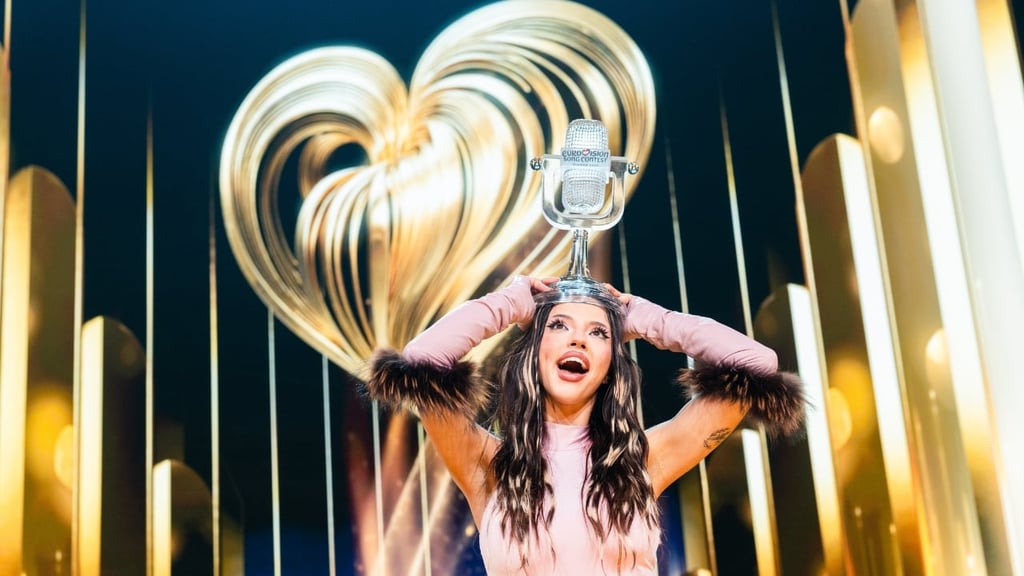
The 70th Eurovision Song Contest was enjoyed by hundreds of millions of people worldwide, as it set new digital records and engaged a whole new generation of fans. The Grand Final of the 70th Eurovision Song Contest celebrated:
This year’s Eurovision Song Contest was a huge hit with young audiences around the world, on all platforms, underlining its enduring global appeal in its 70th year.
The 2026 Contest, held in Vienna, Austria, reached 131 million people across 35 TV markets* with significant increases in youth engagement and digital interaction.
The most notable growth was seen in host country Austria and in Australia (+1.2 million each). In Austria, the reach of 4.4 million represented the highest ever recorded in the country for the Eurovision Song Contest.
The Grand Final achieved an average viewing share of 42.62%, down 5% year-on-year, but remaining more than two times higher than the average for the broadcast channels (16.9%) and higher than all editions between 2009 and 2023.
Linear viewing figures continue to hold strong in a competitive media landscape, once the viewers from the five EBU members who chose not to participate this year are accounted for.
Among Youth (15–24 years old), the Grand Final averaged a viewing share of 54.8%, four times the broadcast channels’ average (13.7%). This increase was larger than last year, highlighting how strongly the Contest boosted public broadcasters’ performances among younger audiences.
Grand Final - Over 50% share in 40% of markets
In 14 out of the 35 measured markets, the Eurovision Song Contest recorded a viewing share above 50%. The strongest viewing shares were observed in Finland (92.8%), Sweden (85.5%), Norway (83.4%) and Denmark (79%).
For the Grand Final alone ORF, this year’s host broadcaster, in Austria achieved an average audience of 1.6 million viewers, representing a 76% increase compared to 2025. Their viewing share was 61.4%, the highest Eurovision Song Contest viewing share ever measured in the country.
Winning broadcaster BNT from Bulgaria achieved a viewing share of 46%. This represents their highest performance across all their 15 participations since 2005.
Many countries who placed within the Top 10 also delivered standout Grand Final audiences:
- Italy (Rai): 5.1 million viewers – up 267,000 on 2025
- Australia (SBS): 464,000 viewers – best audience since 2015, up 299,000 on last year
- Denmark (DR): 955,000 viewers and 79% share – best audience since 2019 and highest share since 2014
- Finland (Yle): 1.8 million viewers and 92.8% share – best audience since 2007 and highest viewing share ever
- Greece (ERT): 2.8 million viewers – highest audience since 2011
Declines in reach were seen in Poland (-3.8 million), the United Kingdom (-3.7 million), and France (-3.3 million).
In the first 48 hours following the broadcast, the Grand Final YouTube live stream attracted 5.43 million unique viewers - an increase of 4.6% compared to Basel 2025, with peak concurrent viewership reaching 1.4 million.
Overall, YouTube on-demand video content generated 638 million views from January 1 to May 30, while short-form video continues to boom as YouTube Shorts content hit a record 153.4 million views - a 31% increase on 2025.
Votes from 148 countries
Fans cast their votes in 148 countries and territories this year - two more than in 2025. Votes from audiences outside the 35 participating countries were amalgamated and their Top Ten songs awarded points equivalent to one participating country in each Semi Final and the Grand Final.
Outside the participating countries, fans voted the most in the United States, Netherlands, Canada, Spain, Ireland, Slovakia, Türkiye, Hungary, United Arab Emirates, and Mexico.
A digital powerhouse
The Eurovision Song Contest has evolved into a year-round global entertainment phenomenon.
From the first artist announcements and national finals, millions of fans follow every development, building excitement months before the Contest reaches the stage - and more than ever, it’s younger audiences that lead the way.
In 2026, that momentum translated into record-breaking digital performance. Across TikTok, Instagram, Facebook, Eurovision connected with more fans than ever before with content views reaching new heights between 1 January and 30 May 2026 - two weeks after the Grand Final.**
TikTok, where 37% of our followers are aged 18-24, saw huge growth this year, and a new milestone was reached as the official account surpassed 4 million followers for the first time ever. Views during show week increased 33% in 2026 compared to 2025.
Overall, between January 1 and May 30, TikTok content generated 872.1 million views, 9.4% higher than in 2025.
On Instagram more fans than ever enjoyed photos, stories, videos, and broadcasts where engagement soared, resulting in over 1 billion views for the first time between January 1 and May 30, 3.25% higher than last year.
Facebook also saw big growth compared to the same period last year, with content receiving 247.8 million views and 43 million accounts reached - up 33.6% and 34.4%, respectively. Interactions jumped almost 23% to 3.8 million in 2026.
The ever-growing r/eurovision subreddit hit 372,150 members, up over 32,000 from 2025. Exclusive-to-Reddit artist first rehearsal megathreads gained 2.27 million views for this year’s Contest, thanks to a dedicated community of moderators and superfans.
Elsewhere, the Eurovision WhatsApp group attracted 105k followers.
In total, the Eurovision Song Contest’s digital channels recorded over 39.3 million engagements during Show Week (11-17 May), beating last year’s total of 39.1 million.
Website and App redefined
Ahead of the Eurovision Song Contest’s 70th anniversary, the official website was rebuilt, and both the iOS and Android Apps were launched, delivering enhanced accessibility, improved UX and functionality, and new ways for fans to engage with the Contest.
Eurovision.com attracted 9.9 million active users between January 1 and May 30, up 32% on the previous year, peaking on the night of the Grand Final with 2.99 million active users - a 43.8% increase on 2025.
Meanwhile, the new Eurovision app reached No. 1 in the Entertainment category on both the iOS App Store and Google Play during Show Week. Fans quickly embraced its new interactive features, with Eurofans creating 166k scoreboard rankings across all Contest editions by May 31.
Global streaming success led by “BANGARANGA”
Shazam Success
Eurovision songs once again sparked major discovery during the Grand Final, with DARA’s winner “Bangaranga” generating the highest Shazam activity of the night.
Sweden’s “My System” by FELICIA and Israel’s “Michelle” by Noam Bettan also ranked among the most searched tracks, alongside the entries from Italy, Cyprus, Australia, Malta, Finland, Norway and Belgium.
Apple Music Momentum
On Apple Music during the event week (12-18 May), this year’s entries continued to resonate strongly.
“Bangaranga” outperformed 2025’s winner “Wasted Love”, attracting 21% more listeners and 20% more plays during the equivalent Contest period.
By 19 May, “Bangaranga” had reached the Apple Music Overall Top 100 in 41 markets, climbed into the Top 10 in 23 countries, and hit #1 in 12 markets including Austria, Bulgaria, Switzerland, Cyprus, Germany, Finland, Greece, Malta, Norway and Sweden.
Germany, the UK, the USA, Israel and Ukraine emerged as the leading markets for Eurovision song streaming in 2026. Germany recorded a 6% increase in Eurovision song plays compared to 2025, while Israel saw particularly strong growth, up 62% year-on-year.
Spotify Streaming Stars
“Bangaranga” went straight to the Number 1 in the Spotify Daily Charts of Austria, Belgium, Bulgaria, Estonia, Finland, Germany, Iceland, Lithuania, Sweden, Switzerland and Ukraine. It also went Top 5 in Denmark, Greece, Latvia, Luxembourg and Poland, and made the Top 10 in Czechia, Norway, Romania and the United Kingdom.
Bulgaria’s first ever winner was played over three million times across the globe on the day of the Grand Final alone, making it the 12th-most played song on that day. Since its release in March, DARA’s superhit now has well over 27 million plays on Spotify!
Radio Success
In the week following the Grand Final, 9 of this year’s entries, more than double last year, were ranked in the ESNS Radar Radio Airplay Chart Top 50, with “Bangaranga” taking the No.1 slot for two consecutive weeks. ***
The Official Eurovision Song Contest Podcast continues to perform strongly, with nearly 900,000 streams and downloads for this year's Contest.
Over 300 thousand visited to Vienna venues
Early data from this year’s Host City Vienna shows around 320,000 people enjoyed Eurovision-related activities during the week of the event.
Number of visitors to shows (Wien Stadthalle): approx. 100,000
Total number of visitors to City Venues: approx. 219,000
- Eurovision Village (Rathausplatz): 150,000
- Eurovision Market Contest (Naschmarkt): 31,500
- EuroClub (Praterdome): 14,000
- Eurovision Fan House (Wien Museum): 23,400
Fans from 75 countries bought tickets to 9 shows during the event week which included 6 Dress Rehearsals and 3 live broadcasts
1,050 journalists from over 50 countries were accredited to cover the event onsite.
Martin Green CBE, Director Eurovision Song Contest, said:
“In its 70th year it’s fantastic to see the impact the Eurovision Song Contest is having on young audiences globally and uniting the world across broadcast and digital platforms.
The hundreds of millions reached via our digital platforms also underlines the Eurovision Song Contest’s 70-year evolution from a “tv show” to a true global, cultural, multiplatform phenomenon. The streaming success of so many of this year’s songs, not least our winner “Bangaranga,” also emphasises the event’s unrivalled status as an instant worldwide launch platform for artists and songwriters.
The Eurovision Song Contest continues to command an extraordinarily strong share of audience, and importantly youth, in many markets, underlining the event’s unique ability to bring people together live at scale as viewing habits change.
While some of our figures are naturally lower without those of our five members who chose not to participate this year, we remain committed to doing everything possible to find pathways back for them in 2027.
Our congratulations go to ORF for a world-class event and we are excited to start work with BNT Bulgaria as we enter our eighth decade of being United by Music.”
Michael Krön, ORF’s Executive Producer of the Eurovision Song Contest 2026, added: "It has only been a few weeks since the Eurovision Song Contest at the Stadthalle in Vienna, but it was the TV event of the year! We can already see what a wonderful impact it had: we reached and delighted millions around the world with our breathtaking shows, fulfilled artists' dreams of performing on one of Europe's most modern and impressive stages, and gave Austria and Europe the opportunity to immerse in a world that appreciates tolerance and humanity, as well as artistic diversity."
Rob Holley, Head of Digital for the Eurovision Song Contest, said: "The continued growth of our digital platforms highlights how Eurovision is successfully connecting with younger audiences around the world. By embracing short-form content and platform-native storytelling together with our Members and partners, we are creating new ways to discover, share and participate in the Contest. Eurovision continues to engage audiences year-round across every generation and is setting a benchmark for how to build cultural relevance and fan engagement in the digital era."
*Source: Results produced by EBU and based on Glance and relevant partners’ data and Member’s data.
Please note the following participating countries are not included in the TV analysis as either they do not have TV audience measurement systems or our broadcaster is not measured: Albania, Armenia, Kosovo, Luxembourg, Malta, North Macedonia and San Marino.
** Source: Instagram, Facebook & TikTok data (figures between 1 Jan 2026 – 30 May 2026 – 14 days after the Grand Final).
*** ESNS Radar Radio Charts combine airplay impact of 62 EBU radio stations in 41 European countries and streaming positions from available Spotify and YouTube country charts
Relevant links and documents
Contact

Dave Goodman
Head of Communications - Eurovision Song Contest and Junior Eurovision Song Contest
Related news

Press release
Eurovision Song Contest 2025: Record-breaking reach as world's largest music event unites global audiences
The Eurovision Song Contest has delivered its biggest impact yet—across TV, digital platforms, and streaming charts - cementing its place as one of the...

Press release
Junior Eurovision Song Contest 2024 “blooms” with young audiences on TV and online
The 22nd Junior Eurovision Song Contest (JESC) broadcast on Saturday 16 November, proved hugely popular with young audiences across the world , reaching...

Press release
Junior Eurovision Song Contest 2025 unites millions of young audiences on TV and online
The 23rd Junior Eurovision Song Contest proved hugely popular with young audiences across the world, surpassing 100 million views on TikTok for the first...

Press release
EBU Members deliver most-watched Winter Olympic Games ever with Milano Cortina 2026
European Broadcasting Union (EBU) Member broadcasters have delivered their most successful Winter Olympic Games ever, with Milano Cortina 2026 achieving...

Press release
Eurovision Song Contest welcomes back Montenegro and confirms participants of 2025
The European Broadcasting Union (EBU) is excited to announce, following a record-breaking event in 2024, an increased line-up of 38 public service broadcasters...

Press release
Bulgaria’s Dara wins spectacular 70th Eurovision Song Contest with ‘Bangaranga’
DARA has won the Eurovision Song Contest 2026 for BNT with the song 'Bangaranga', securing Bulgaria’s first-ever Eurovision victory. Hosted by ORF at the...

Press release
Eurovision Song Contest marks 70th anniversary with biggest-ever global celebration
With rehearsals beginning in Vienna this weekend, the European Broadcasting Union (EBU) and its Members are kicking off the Contest’s 70th anniversary...

Press release
Fans from more than 70 countries to travel to Vienna for 70th Eurovision Song Contest
As it celebrates its 70th anniversary the Eurovision Song Contest is proving once again that music knows no borders, as fans from across the globe prepare...