Democracy needs more than just opinions
17 June 2026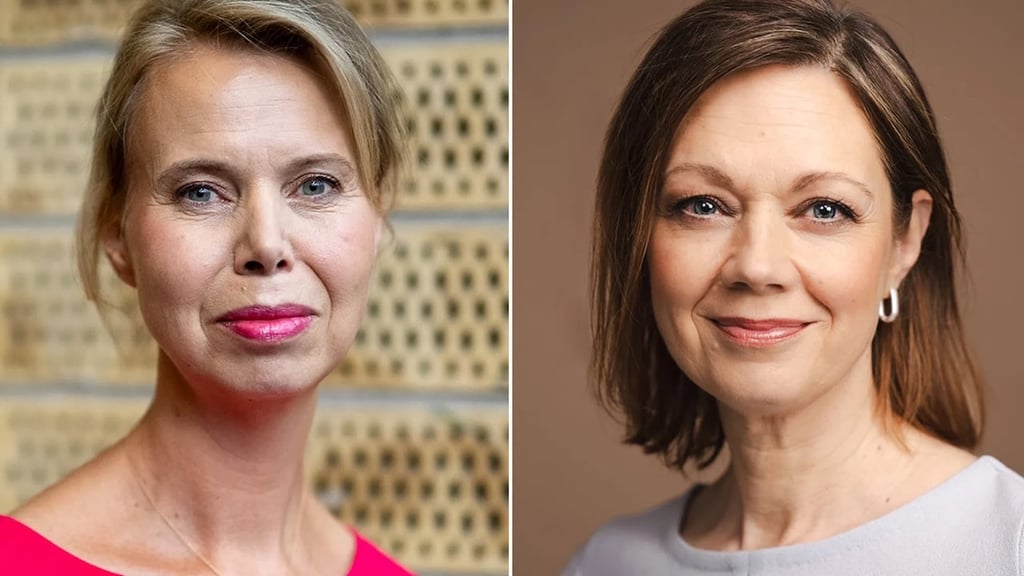
This article is by Anne Lagercrantz, CEO of SVT (Sweden) and Marit af Björkesten, CEO of Yle (Finland), and was originally published in Swedish in Svenska Dagbladet on 6 June 2026 under the title Döm inte ut den fria journalistiken (Don't Write Off Free Journalism). It is reproduced here in English translation with kind permission.
There is a worrying shift underway in how journalism is viewed.
At a time of AI-generated disinformation and growing scepticism toward institutions, the very idea of factual and impartial journalism is being questioned. More and more often, we hear the claim that neutral news reporting does not exist, that all journalists are driven by ideology, and that objectivity is merely a façade for hidden agendas.
This is a dangerous line of reasoning. It risks undermining the very idea of shared facts and a shared reality. And fundamentally, it is false.
Of course, journalists are human beings, with experiences, values, and perspectives just like everyone else. But the conclusion that factual and balanced journalism is therefore impossible is just wrong.
Courts do not become meaningless because judges are human. Science does not become worthless because researchers hold personal beliefs. On the contrary, every profession develops methods and safeguards precisely to deal with the fact that we are human. Journalism is no exception.
When news journalists step into their professional role, they share a common mission: to set aside personal loyalties and describe reality as fairly and truthfully as possible while holding power to account.
It is also worth remembering that audiences have not abandoned the ideal of factual journalism. On the contrary, international research* based on survey data from 40 countries collected by the Reuters Institute, at Oxford University, shows that a majority of people want news to present facts and different perspectives, and then allow individuals to draw their own conclusions.
In both Sweden and Finland, a clear majority prefers news without a particular political viewpoint. In Sweden, 62 percent prefer politically neutral news, and in Finland 58 percent. Only 12 percent and 8 percent respectively prefer news that reinforces their existing worldview.
Every day, thousands of events could become news stories. Selection is therefore an unavoidable part of journalism. But the fact that journalists make editorial choices is not an argument against factual reporting – quite the opposite.
Publishing a story involves a chain of checks, discussions and judgements. Journalism is almost always a collaborative effort. A reporter conducts research, contacts sources, interviews people and verifies information. Story ideas are discussed with editors and colleagues. Editorial conversations constantly examine what worked, what could have been improved, and what may have been overlooked.
For sensitive publications, an editor-in-chief or responsible editor is consulted. In Sweden, media content can be reviewed by the Media Ombudsman and the Broadcasting Commission. In Finland, complaints can be brought before the Council for Mass Media. Anyone can file a complaint if they believe standards have not been met. There is also an obligation to correct errors.
Another argument increasingly heard is that it would be more honest to abandon the ambition of factual and impartial journalism altogether in favour of openly opinion-driven reporting.
Opinion journalism has an important place in a democracy. Opinion pages should seek to persuade. People should be free to argue for ideas and worldviews, including in the media. But news journalism and opinion are not the same thing.
There is a difference between trying to persuade an audience and trying to provide the best possible basis for people to form their own opinions. Problems arise when the boundaries between commentary and reporting become blurred. These problems are amplified in social media feeds and algorithm-driven environments where news, opinion, and influence campaigns appear side by side.
In such an information landscape, it becomes increasingly difficult to maintain a shared factual foundation for democratic debate. We risk losing the ability to disagree about the same reality. As more actors compete for attention, opinion-driven narratives are often rewarded, making it harder to distinguish facts from opinions.
At the same time, editorial media are not infallible. Journalism must be open to criticism and improve because of it.
Those of us who represent editor-led news organizations must do a better job of explaining what professional journalism actually is, how verification works, how editorial decisions are made, and what distinguishes journalism from rumours circulating on social media. We need to demonstrate how journalistic methods differ from opinion, propaganda, and activism.
Allowing the false narrative that news media are inherently untrustworthy and incapable of portraying the world fairly and accurately to take root would be deeply damaging.
A world consisting only of opinions and no facts would leave audiences disoriented, frustrated and divided.
Neither Sweden nor Finland is the United States, but there is reason to reflect on the American media landscape. There, openly partisan news reporting has become normalized. News consumers no longer expect reporting to be free from political leanings.
That is not a model to emulate.
The Swedish and Finnish media systems, with their combination of strong public service broadcasters and vibrant commercial news media, have served both countries well. Research shows that this strengthens news consumption, public knowledge and social trust.
The alternative is an information landscape reduced to opinions, suspicion, and competing narratives. It would be a world in which people ultimately no longer know what they can trust.
And that would be devastating for democracy as well.
Anne Lagercrantz, CEO, SVT
Marit af Björkesten, CEO, Yle
* Since the original article was published, the Reuters Institute Digital News Report 2026 was released. It states that 63% of people in Sweden say they prefer impartial news, compared with 11% who prefer news that reflects their own views. In Finland, the corresponding figures are 60% and 9%.
Relevant links and documents
Contact

Related news

Op-ed
You deserve the truth, not AI’s interpretation of it.
This op-ed was co-authored by EBU Director of News, Liz Corbin, and Vincent Peyrègne, CEO of WAN-IFRA, for World News Day 2025 (28 September). We all want...
Stories
Q&A with Anne Lagercrantz: “Accountability is so valuable because it will become a rare commodity”
We talk to Anne Lagercrantz, Director General of SVT Swedish Television, as one of a series of interviews with contributors to the EBU News Report 2025:...
Blog
Why funding public service media helps all of us get better online news
We’ve heard for decades that public broadcasters ‘crowd out’ private media; why does this claim persist when the evidence says otherwise? The claim persists...

Speech
Some of our red lines have become constrictive red tape. Time for a rethink.
This text is based on a speech delivered by EBU Director of News, Liz Corbin, at the AI Forum, on 25 March 2026, in Brussels. I’ve been thinking a lot...

Stories
"Transparency is important, but the public does not want AI labels everywhere, only when it is materially important"
Is generative AI a game-changer for journalism? I’m a bit more sceptical than six months ago. It’s a huge transformation in terms of the potential for...

Press release
EBU News Report 2025: Leading Newsrooms in the Age of Generative AI
For journalists and news outlets, there is no going back as Artificial Intelligence (AI) transforms how the media work in a new information age. This year’s...

Stories
"You can’t look at GenAI too fearfully. You have to find as many opportunities as you can."
In which ways is generative AI a game-changer for journalism? As with previous disruptive technologies – the internet, social media, and smartphones –...

Press release
The world’s news industry invites you to join FACTS IN : FACTS OUT, a campaign to protect news integrity in the age of AI
A consortium representing news providers worldwide is inviting anyone who values trustworthy journalism and information to join a campaign called FACTS...