18 broadcasters confirmed to compete in Junior Eurovision Song Contest 2025
01 October 2025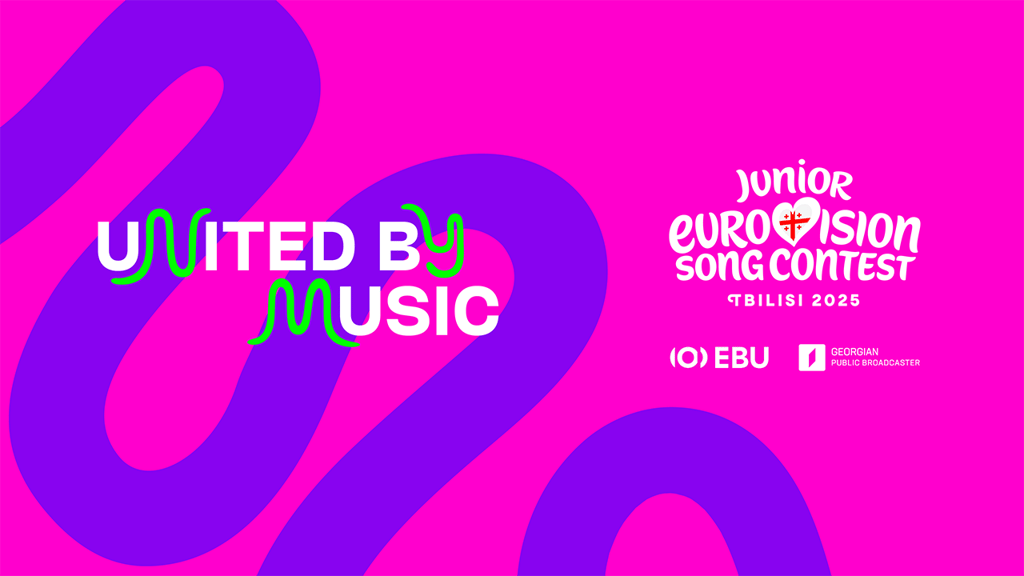
The European Broadcasting Union (EBU) and Georgian Public Broadcaster (GPB) are excited to confirm the 18 broadcasters taking part in the 23rd edition of the Junior Eurovision Song Contest on Saturday 13 December in Tbilisi, Georgia.
Young performers aged 9 to 14-years-old from 18 different countries will gather in the Georgian capital to share their songs, creativity and being United by Music with millions of viewers.
The 18 participating broadcasters and their countries are:
RTSH (Albania)
AMPTV (Armenia)
Ictimai (Azerbaijan)
HRT (Croatia)
CyBC (Cyprus)
France Télévisions (France)
GPB (Georgia)
TG4 (Ireland)
Rai (Italy)
PBS (Malta)
RTCG (Montenegro)
AVROTROS (Netherlands)
MKRTV (North Macedonia)
TVP (Poland
RTP (Portugal)
SMRTV (San Marino)
RTVE (Spain)
Suspilne (Ukraine).
The 2025 event will celebrate the return of 3 countries to the competition.
Montenegro last took part in 2015, and Croatia last competed in 2014 having won the first Contest in Copenhagen in 2003.
Azerbaijan also returns for the first time since 2021.
A Stage Rooted in Georgian Culture
GPB have also revealed the spectacular stage design for the Junior Eurovision Song Contest 2025.

The stage draws deeply from Georgia’s heritage while celebrating the dynamism of young performers. At its heart stands a striking representation of the Doli - the traditional Georgian folk drum that has kept rhythm in celebrations for generations.
Around it rise sculptural forms inspired by the country’s dramatic mountain landscapes and the castles, fortified villages, and towers that dot Georgia’s terrain.
The result is a setting that merges the timeless with the modern: a cultural heartbeat reimagined for a new generation of artists.
A Bold, Playful Visual Identity
Alongside the stage reveal, the Junior Eurovision Song Contest 2025 theme art and branding have also been unveiled.
United by Music becomes the Contest’s permanent slogan and appears in a wordmark that embodies rhythm, freedom and youthful energy.
Its letters break free into spontaneous, handwritten shapes that echo the playful creativity of the young artists. No two versions are identical: the shapes shift, loop, and dance with music’s natural energy.
Dynamic splashes of vibrant colour transform the logo into a living, evolving chorus of individuality — a symbol of diversity, inclusion, and collective celebration.
For the Contest’s on-screen design, selected letters from the wordmark are transformed into spontaneous, playful handwritten shapes which serve as dynamic frames or holders for participant photos and other images, seamlessly integrating imagery into the visual identity.
Martin Green, Director of the Junior Eurovision Song Contest, said:
“We are thrilled to welcome 18 talented young artists and their delegations to Tbilisi. The Junior Eurovision Song Contest is a unique showcase of youthful creativity and cultural diversity, and every year it reminds us of the boundless energy and imagination of Europe’s next generation.
"Our thanks go to GPB for their dedication and creativity in preparing a stunning stage and artwork for what will be an unforgettable event.
"We can't wait to share this magical experience with the world in December.”
Natia Mshvenieradze, Executive Producer for GPB added:
“It is a great honour to welcome you all to our beautiful country, Georgia.
"We are proud to host Europe’s most joyful and inspiring music event already for the second time. This year’s show will be the result of months of dedication, creativity, and teamwork, bringing together the very best of our production, stage design, and technical excellence.
"We warmly welcome the 18 participating broadcaster delegations and extend our kindest wishes to their young representatives.
"Welcome again and let the magic of music unite us all!"
The Junior Eurovision Song Contest 2025 will take place at 17.00 CET on Saturday 13 December live from the Olympic Palace in Tbilisi, Georgia.
GPB are hosting the Contest for the second time having last staged the event in 2017.
Georgia is the most successful country in the history of the Junior Eurovision Song Contest having won the event four times:
- 2008 - Bzikebi with “Bzz…”
- 2011 - Candy with “Candy Music”
- 2016 - Mariam Mamadashvili with “Mzeo”
- 2024 - Andria Putkaradze with “To My Mom”
Last year’s Junior Eurovision Song Contest in Spain reached 23 million viewers across 15 measured markets and millions more via the event’s digital channels.
The event, hosted by RTVE in Madrid, delivered a 15.7% viewing share among children aged 4 to 14, more than triple the channel average for the measured markets (4.9%). It also surpassed 2023’s share of 14%.
The Junior Eurovision Song Contest 2024 also delivered an 8.1% viewing share among 15–24-year-olds, markedly outperforming the average 5% normally achieved by the same group of broadcast channels.
43% of those watching the show on the Contest's official YouTube channel were under 24-years old with the highest number of viewers for the live show watching in host country Spain, followed by Poland, Armenia, the Netherlands, Germany, the United Kingdom and Greece.
Follow all the latest Junior Eurovision Song Contest news and updates on:
- Website: junioreurovision.tv
- Instagram: @junioreurovisionofficial
- TikTok: @eurovisionjr
- YouTube: Junior Eurovision Song Contest
Relevant links and documents
Contact

Dave Goodman
Head of Communications - Eurovision Song Contest and Junior Eurovision Song Contest
Related news

Press release
Young artists from 17 countries will “bloom” at Junior Eurovision Song Contest 2024
The EBU and Host Broadcaster RTVE are excited to confirm the 17 countries participating in the 22nd Junior Eurovision Song Contest (JESC) in Madrid on...

Press release
France wins Junior Eurovision Song Contest 2025 and becomes joint record holder
France Télévisions has won the 23rd Junior Eurovision Song Contest held in Tbilisi, Georgia, on Saturday 13 December. The winning song, “Ce Monde” (This...

Press release
Georgia to host Junior Eurovision Song Contest 2025 in Tbilisi
The European Broadcasting Union (EBU) and its Georgian Member, GPB, are excited to announce that Tbilisi, Georgia, will host the Junior Eurovision Song...
Press release
Junior Eurovision Song Contest 2025 unites millions of young audiences on TV and online
The 23rd Junior Eurovision Song Contest proved hugely popular with young audiences across the world, surpassing 100 million views on TikTok for the first...

Stories
Eurovision Classical Concerts to be broadcast by 22 public service media organizations
Eurovision Classical Concerts, a new pan-European music series developed under the Eurovision brand, is set to be broadcast by 22 public service media...

Press release
35 broadcasters to compete at 70th Eurovision Song Contest in Vienna
The European Broadcasting Union (EBU) has confirmed the list of public service broadcasters competing in the 70th edition of the Eurovision Song Contest,...

Press release
Junior Eurovision Song Contest 2024 “blooms” with young audiences on TV and online
The 22nd Junior Eurovision Song Contest (JESC) broadcast on Saturday 16 November, proved hugely popular with young audiences across the world , reaching...
Press release
EBU extends worldwide media rights agreement with European Gymnastics, ensuring free-to-air gymnastics for millions of fans across the world
Gymnastics audiences in Europe and beyond will continue to enjoy major competitions for free, as the European Broadcasting Union (EBU) extends its exclusive...