Interview with Tinatin Berdzenishvili, Director General of GPB
03 March 2022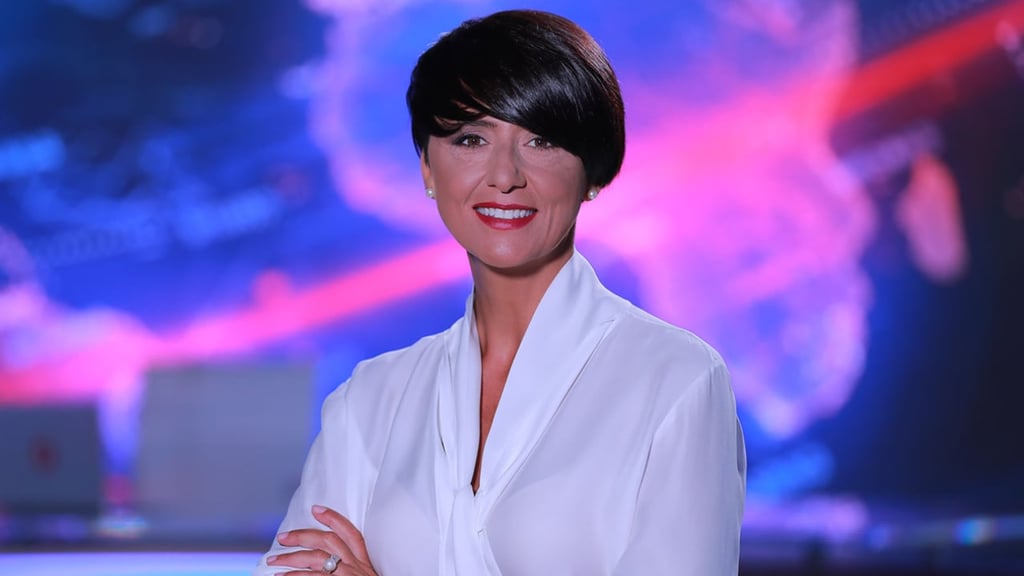
Tinatin Berdzenishvili is Director General of the Georgian Public Broadcaster (GPB) and is an active member of the EBU’s Media Steering Group and Gender Equality Steering Group. This interview, which covers themes of leadership and innovation, features in the latest EBU News Report 2021-22: What’s Next? Public Service Journalism in the Age of Distraction, Opinion & Information Abundance.
What do you perceive as the biggest challenges in your role?
The biggest challenge in our country is our heritage. We are a very young democracy. Our public broadcaster was transformed from state television as recently as 2005. The attitudes towards us are still a bit post-Soviet; a lot of people think we are state television and we are obliged to serve the government. We are doing our best to serve our audience and explain to them: How are we different from commercial media, what are our core values? We have to explain this to officials, the people and journalists.
What’s your strategy in achieving this?
We have been thinking a lot about what kind of journalism we should be implementing here. The media is very polarised in Georgia. We have big governmental TV and an opposition channel, people watch this more for entertainment rather than news. Of course, this means people don’t want to watch our balanced, boring news. If we talk about ethical norms and standards, we are ignored. Also, there is social media, so, plenty of fake news. This means we constantly have to follow politicians’ agendas and don’t get around to setting our own as much as we need to. That’s why we came up with the idea to focus on constructive journalism. At first it was not easy to explain to our journalists why they should be doing this. They thought they had to deliver positive news. But it is more about developing solutions.
Have you already experimented with constructive news?
We are just at the beginning of this journey; it will probably take two to three years to get there. First, our management needed to learn about constructive news. We are sending eight people to the Constructive Institute in Aarhus to have them trained. They will be ambassadors and teach the others.
Is this how you work as a leader? Looking around for what works and then trying to implement it?
Media is always a mirror of society, so you need different approaches in different markets. But yes, we take the best examples of Western European models and try to implement them here. Our best role model is Finnish Yle, we are quite similar in population size and structure. We have 1,200 employees serving a population of 3.5 million people.
Like others, you are right in the middle of digital transformation. How do you go about that as a leader?
I think the problems we faced here were very similar to those of other broadcasters. People’s mindsets are that public service media is only television. Staff from TV, radio and online didn’t know each other, online wasn’t taken seriously. We started to change this two years ago by building an integrated newsroom. At first, journalists were laughing about that. How can we even sit together? We are different, we have different experiences! We have since made progress. We did a lot of research demonstrating that people were not waiting for the 9 o’clock news show in the morning any longer; they were getting their news from their phones. We changed this paradigm: now, digital comes first. Also, we don’t have only news but also education and entertainment. We put the cooking show MasterChef on YouTube. It was a huge success. We have now 30,000 people per minute on digital, we saw huge gains in audience. These things changed the attitude of the new generation.
So, success stories breed success?
Yes. Another really big success story was our TV School during the pandemic; we were the first in Europe. When people were afraid of leaving their homes, we brought 150 teachers into the studio, we recorded all the lessons, all the subjects, for all grades according to the national study plan. This has been really important to change people’s attitudes towards our brand.
Has the pandemic accelerated change?
Definitely. For one, we learned a lot of new tools. We didn’t stop one single programme during the pandemic. Also, we don’t refuse now when people want to work remotely. We don’t need their hours to be spent at the office, we need the work to get done. But now most of the staff has come back to the office; only 10 percent work from home.
You have changed a lot in recent years. What’s your recipe for successful implementation?
It depends on the issues. We are taking a lot of risks. We are trying to experiment. This is really worrying for some. As management, we are trying to be very open. We are doing a lot ourselves and do not delegate too much, just to give examples, and be role models. Of course, it is not easy. Changing the culture takes time. Our communication is totally different than what it used to be. People are more engaged in organizational life. We have 700 people in our social media chat. As management we are trying to post everything that is important, giving people all the information they need. We are listening to their comments, and if something is changeable, we are doing that. They know they are important.
Communication is at the core of leadership. Any advice on how to do this right?
I believe communication is my strong side. I’ve come from marketing, presenting numbers, and statistics. I love that. Communication is at the heart of the managerial process. But while we communicate everything to our staff, we have a lack of good communication outside of the organization. We can’t spend too much money on marketing as a public broadcaster. But we need to get our message across and create a dialogue with the people: Do we need this kind of organization for the country? If yes, we need to treat it more respectfully within the government.
You are also working on increasing diversity, not only at home but also as chair of the Gender Equality Steering Group at the EBU.
We are doing well on women in Georgia, we are at 60 percent women now in our organization. We are very balanced in leadership. And we have the first camerawoman operating a crane camera. Talking about diversity used to be a little hard around here; that’s why we opened a separate division dedicated to it. Now we focus on ethnic minorities, people with disabilities, LGBTQ. We put anchors on air who belong to an ethnic minority. We started a big project for people with disabilities. Our first employee with Down's Syndrome joined us a couple of months ago. We also do trainings on how to behave, what is our language towards people with disabilities. Journalists often don’t know how to cover this topic without insulting people. We want to be very open with all the diversity we have in our country.
Are you using metrics to assess performance?
This is my favourite phrase: you cannot manage what you don’t count. We are doing a lot with metrics and give the data to our employees. We are trying to give them the whole picture to see what is going on. We measure everything. Right now, we measure how many of our staff are vaccinated and communicate it to them. We awarded prizes for those getting vaccinated, organized collective vaccination events. And we are talking to those who are not yet vaccinated, trying to convince them. This is another success story. 90 percent of our employees are vaccinated compared to 30 percent in the country.
Reward structures are very important to changing culture, what have you changed?
This is very important indeed, but motivation does not only work through money, it can be a lot of things. This said, with digital transformation, we tried everything and it didn’t work. When we implemented bonuses, our journalists started to write for digital, too.
What is the biggest success you have seen in recent years?
We had our local elections in the autumn. And the OSCE attested us that our election coverage was balanced and impartial. We have had many reasons to celebrate in the past few years, but I think this is a solid achievement.
With the political and historical context you described, impartiality must be particularly challenging to implement. How do you train your journalists?
This is why we want to focus on constructive news: it is a means to demonstrate independence. On social media, we use guidelines similar to BBC, Yle, Swedish Radio, and other EBU members. Some of our people said they were too strict, and they would infringe on freedom of expression. But we need to have some rules. Being politically neutral is part of the contract now. If you don’t agree, you can’t sign the contract. Social media cannot be a private world — there is no private world any longer
Relevant links and documents
Contact
Related news

Speech
Some of our red lines have become constrictive red tape. Time for a rethink.
This text is based on a speech delivered by EBU Director of News, Liz Corbin, at the AI Forum, on 25 March 2026, in Brussels. I’ve been thinking a lot...
Speech
Jean Philip De Tender: society will always need PSM if we hold on to our values
EBU Deputy Director General & Media Director Jean Philip De Tender gave this keynote at Public Broadcasters International, on Tuesday 22 October 2025,...
Blog
What the BBC crisis can teach public service media
It's been a traumatic ten days of controversy and resignations at the BBC, which will have repercussions right around Europe. The resignation of Director...

Stories
Q&A with Kasper Lindskow: “Generative AI can give journalists superpowers”
We talk to Kasper Lindskow, Head of AI at the JP/Politikens Media Group in Denmark, as one of a series of interviews with contributors to the EBU News...
Blog
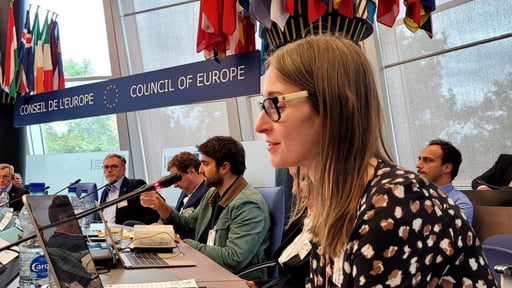
EBU calls on Council of Europe Member States to safeguard public service media
I would like to start with the positive. The Council of Europe understands the role of public service media in upholding the fundamental right of freedom...

Stories
Q&A with Pattie Maes: “We don't have to simplify everything for everybody”
We talk to Pattie Maes, Professor of Media Arts and Sciences at the MIT Media Lab, as one of a series of interviews with contributors to the EBU News Report...

Press release
Post-Elections: EU policymakers must commit to safeguarding Europe’s media sector
As the dust settles on the recent European elections, the EBU calls upon newly elected Members of the European Parliament (MEPs) to prioritize the the...

Stories
"You can’t look at GenAI too fearfully. You have to find as many opportunities as you can."
In which ways is generative AI a game-changer for journalism? As with previous disruptive technologies – the internet, social media, and smartphones –...