YouTube - Friend or Enemy? The dilemma for broadcasters
11 March 2026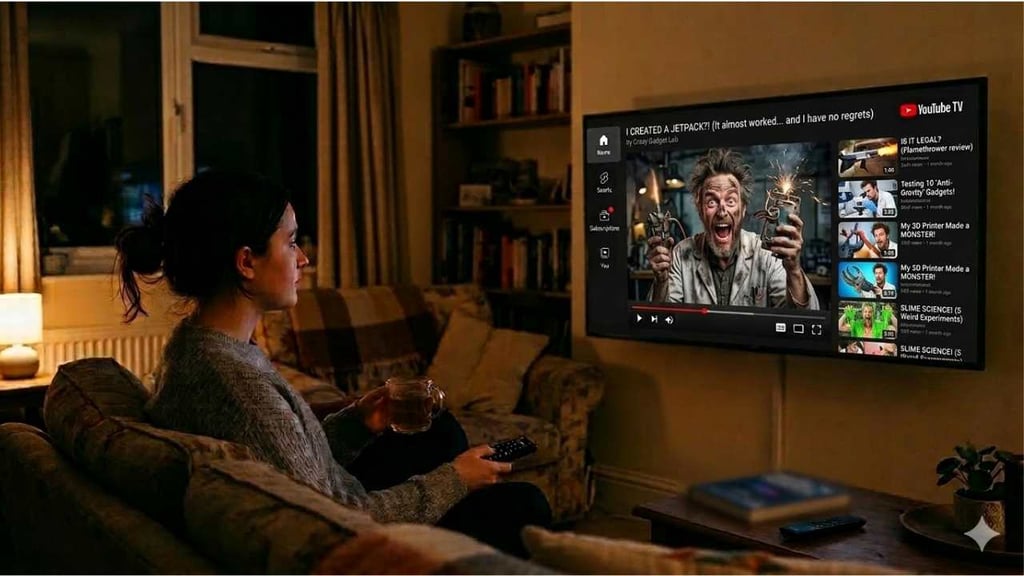
In this blog, EBU Director General Noel Curran examines the growing dilemma public service media face as YouTube evolves from a promotional platform into an important part of the television ecosystem. While the platform offers opportunities to reach younger audiences and extend public service journalism into new digital spaces, it also raises concerns about revenue, visibility, platform dependency and cultural impact. As YouTube expands into new areas, the key question for broadcasters is no longer whether to engage with the platform – but on what terms.
For much of the past decade, YouTube occupied a relatively straightforward place in the digital strategies of public service media (PSM): a marketing channel. A shop window. Somewhere to place clips that might drive audiences back to our own platforms.
That era is over.
Today, YouTube is not simply part of the online video ecosystem - it is part of the television ecosystem itself. In the United States, it has become the largest streaming platform on television, consistently outperforming Netflix, Amazon Prime Video and Disney+ in total viewing time and it became the first streaming service to exceed 10% of all TV usage in 2024.
Are we seeing the same trends in Europe?
In almost half of European countries, YouTube is already the number one streaming platform in terms of monthly reach1.
For most young Europeans, YouTube is now a more significant video destination than traditional broadcasters. I see it with my own two teenagers – everything from comedy clips to music videos to influencers. On the phone or on the TV.
Recent research in the UK shows YouTube is the second most-watched media service, behind only the BBC itself. Barb data also showed that the TV set has become the most-used device for watching YouTube in UK homes2.
For public service media organizations built on the principle of universality, this presents a profound strategic dilemma.
Is YouTube a reach partner? Or is it becoming the gatekeeper of Europe’s media future?
The opportunity: extending universality into digital spaces
There is an unavoidable truth confronting all our Members: younger audiences are already on YouTube and have been for some time.
The average European spends around 30 minutes per day watching free social video platforms such as YouTube - rising to more than an hour among younger demographics3. Music videos still dominate consumption but the spread across other genres and types of programming is growing rapidly.
In that context, maintaining a presence on YouTube is no longer about promotion; it is increasingly about public service delivery itself.
Nearly all our Members are now active on the platform. Two-thirds intend to expand their activity, with 55% producing dedicated YouTube-native content and 60% livestreaming4.
This shift reflects a broader evolution in how PSM are using global platforms.
In recent months, we have seen broadcasters across Europe launch topic-specific YouTube channels focused on youth, education and explanatory journalism. Increasingly, they are commissioning creator-fronted news formats and short daily updates designed specifically for social viewing environments.
Last month’s landmark partnership between the BBC and YouTube - which will see the creation of original, digital-first programming for the platform, including news formats designed to combat misinformation – is significant. Yes, the BBC is unique with its huge global reach. But this is still a big shift and one that all other broadcasters will watch closely.
From a public value perspective, there is a strong argument that PSM’s presence on YouTube can help fulfil its core remit: ensuring trusted, regulated journalism is visible within an online information environment often dominated by unverified or misleading content.
The platform is also very effective at connecting specialist public-interest content with large, highly engaged niche communities - allowing minority sports, regional culture, documentary and educational programming to build loyal followings that can be supported by PSM’s rich archives. For some of our smaller Members, diaspora audiences on YouTube are huge relative to their domestic reach.
At the EBU, we are engaged in a constructive and responsive dialogue with YouTube, working together to identify partnership approaches that help our Members reach new audiences while protecting the values at the heart of PSM.
The risks: dependency, revenue and visibility
At the same time, we know partnerships with YouTube do come at a cost.
Under standard agreements, the platform retains approximately 45% of advertising revenue generated around hosted content. This creates an uncomfortable paradox: PSM invest heavily in producing high-quality, public-interest programming, only for the monetisation of audience attention to take place largely within the platform’s own commercial ecosystem. Content that is not monetizable risks not performing as well because the algorithm favours content that can generate revenue.
At a time when many broadcasters face declining advertising income and, in some cases, falling licence-fee contributions, the migration of both audiences and revenue towards global digital platforms raises serious sustainability questions.
There are also editorial implications.
Platform algorithms are not designed to reflect public service obligations. Trusted journalism competes on identical terms with influencer commentary, political propaganda and foreign state-backed media. Visibility, and therefore impact, may depend less on editorial merit than on optimisation for engagement metrics.
Distribution through YouTube can also weaken the direct relationship between public service media and their audiences. Data, discoverability and user journeys are increasingly mediated by platform infrastructure, contributing to broader debates within Europe around digital sovereignty and strategic autonomy. As we wrote yesterday, platforms like YouTube must also play their part by properly implementing their obligations under the European Media Freedom Act.
And, as younger audiences consume a growing proportion of non-national content through global platforms, some have raised concerns about the potential erosion of shared cultural experiences - a cornerstone of PSM’s societal role.
A long-term public value question
Despite this, for PSM, YouTube is no longer a small-scale tactical distribution decision. It is a long-term public value question.
And YouTube is changing emphasis too. It is, for example, expanding into premium live sports rights. Last month it launched a bundle package for Sports channels in the US at a heavily discounted monthly rate to their usual premium offer. If this works for them, we assume we are likely to see that in Europe too. This could lead to new dynamics in the rights market and in PSM’s visibility of national sporting events – as we see in Portugal with LiveModeTV broadcasting the 2026 FIFA World Cup live on YouTube.
What was once used primarily to drive audiences back to public service platforms is now used as a platform in its own right: commissioning content, hosting journalism, livestreaming major events and enabling international monetisation.
PSM must therefore strike a careful balance - working with global platforms to remain relevant and visible in a fragmented digital world, while ensuring that these partnerships do not undermine the economic sustainability, editorial independence or cultural mission that define their public value.
We shouldn’t forget that traditional TV viewing is far from over. PSM is still reaching over 80% of European citizens every single week5 – and nearly 70% of young people6. We remain the most trusted source of news across Europe and the single biggest investors in European content. We have much to build on.
But the question is no longer whether public service media should engage with YouTube – it’s on what terms.
1 GWI Core Q1-4 2025, 20 European countries, internet users 16-64
2 Barb data, all individuals 4+. YouTube use in home on 4-screens. 1 January 2022 – 31 December.. As viewed data. % of viewing time with YouTube split by screen. Viewing time is collected when devices are connected to the home WIFI network.
3 Ampere: Ampere Consumer Survey, Q1 2025, 9 European countries, Internet users 18-64 and Internet users 18-24
4 EBU – Media Intelligence Survey 2025 – Based on 53 PSM organizations’ latest data
5 EBU – Media Intelligence Survey 2025 – Based on 24 PSM organizations’ latest data; 2024 data for 18 organizations and 2023 data for 5 organizations
6 EBU – Media Intelligence Survey 2025 – Based on 17 PSM organizations’ latest data; 2024 data for 13 organizations and 2023 data for 3 organizations
Relevant links and documents
Written by

Related news
Blog
Public Service Media: Innovating, Partnering and Protecting Europe’s Digital Future
This year, we are marking 100 years of technical collaboration between public service media. The EBU’s predecessor, the International Broadcasting Union,...

Blog
Future-Proofing Public Service Media: Digital strategies for 2025
Social media in 2025 is shaping up to be a battleground for attention, credibility and the ability to adapt. As we move into an era of AI-driven workflows...

Good intentions, poor outcome: EU findability rules for digital media
Renate Dörr, European Affairs expert with ZDF, explains how Germany’s well-intentioned effort to implement EU findability rules for digital media has failed,...
Speech
It's time to get prominence right.
The revision of Audiovisual Media Services Directive (AVMSD) is coming, and with it, a genuine opportunity, perhaps the best in years, to get prominence...

Press release
Junior Eurovision Song Contest 2025 unites millions of young audiences on TV and online
The 23rd Junior Eurovision Song Contest proved hugely popular with young audiences across the world, surpassing 100 million views on TikTok for the first...

Blog
Incoming EBU Digital Committee Chair Philippe Keutgen brings a bold new vision
The EBU Digital Committee has entered a new chapter under the leadership of its recently elected Chair, Philippe Keutgen, Media Platforms Strategy and...

Preparing for the next generation of free television services in Ireland
DVB-I, the open standard for internet-centric television service discovery, could be key to the future development of the digital terrestrial television...

Going live (again) to reclaim audience and relevance
PSM cannot survive by mimicking the logic of global platforms. The dramatic reduction in live production costs – enabled by IP-based workflows, 5G standards,...